
 English
 Español
 Português
 Русский
 العربية
 Français
 Deutsch
 中文
中文 日本語
日本語 한국어
한국어How JingZhan Connects Injection Moulding Production with In-House Tooling Support
A stable injection moulding process depends on more than the moulding machine alone. Part design, mould condition, setup, process control and the speed of technical feedback all influence the result. A short walkthrough of JingZhan Mould Tecnologia shows how these elements come together, from the first view of a newly moulded component to the production floor and the in-house tooling workshop.
The video follows a simple sequence: inspect the part, monitor the moulding process, organize production and keep tooling support close to the machines. Together, these scenes show why an integrated workflow is valuable for both new projects and repeat production.
The Moulded Part Is the Starting Point
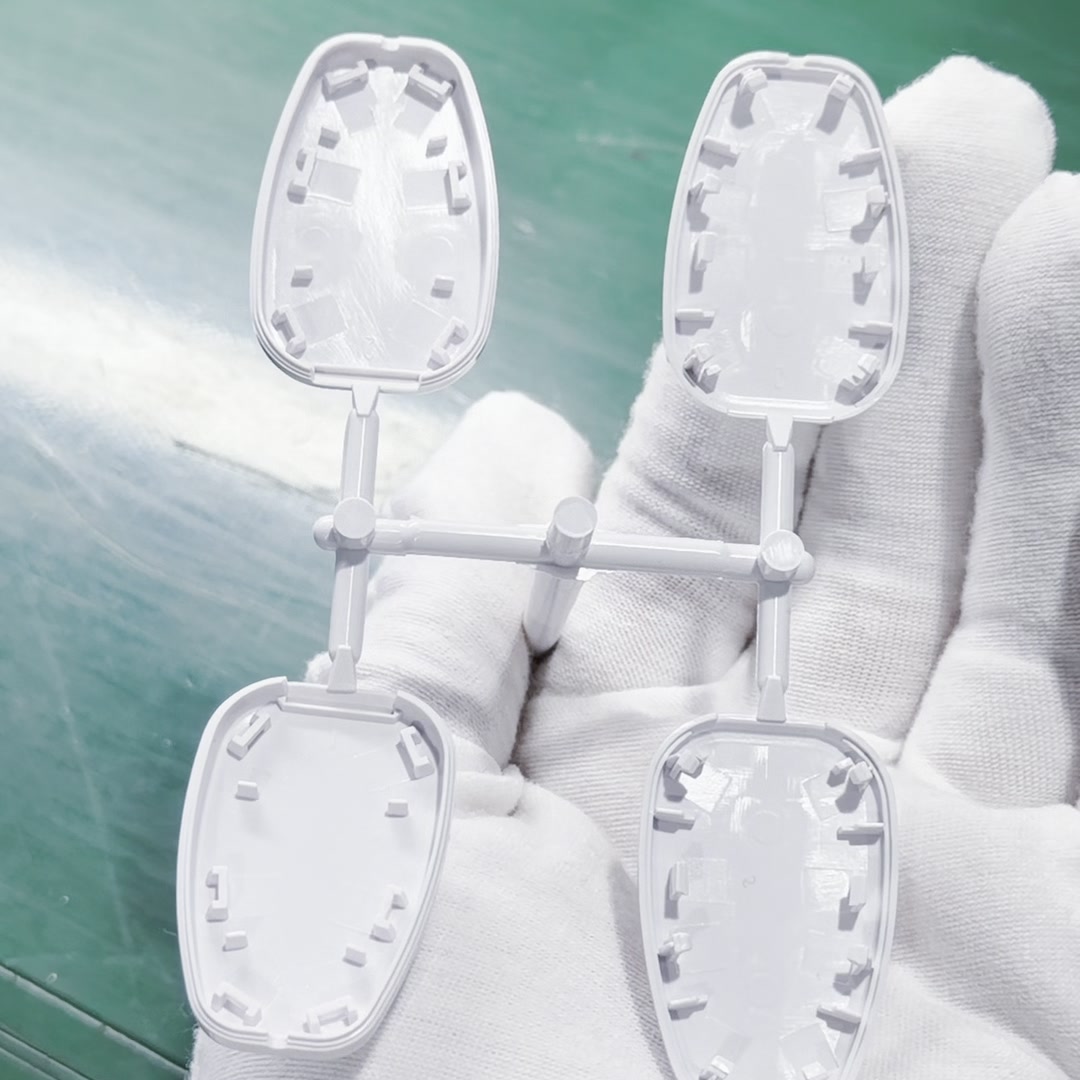
The video opens with transparent moulded components still connected by their runner. Even a small part can include several details that affect manufacturing, such as clips, ribs, thin walls, curved surfaces and local thickness changes. These features influence how the cavity fills, how the part cools and how it releases from the mould.
An initial visual check can reveal incomplete filling, flash, visible marks or deformation. Dimensional and functional checks can then focus on the features that affect assembly. Looking at the complete shot, including the runner and gate area, also gives the tooling and moulding teams useful information about material flow and part removal.
Skilled Operators Support a Stable Setup
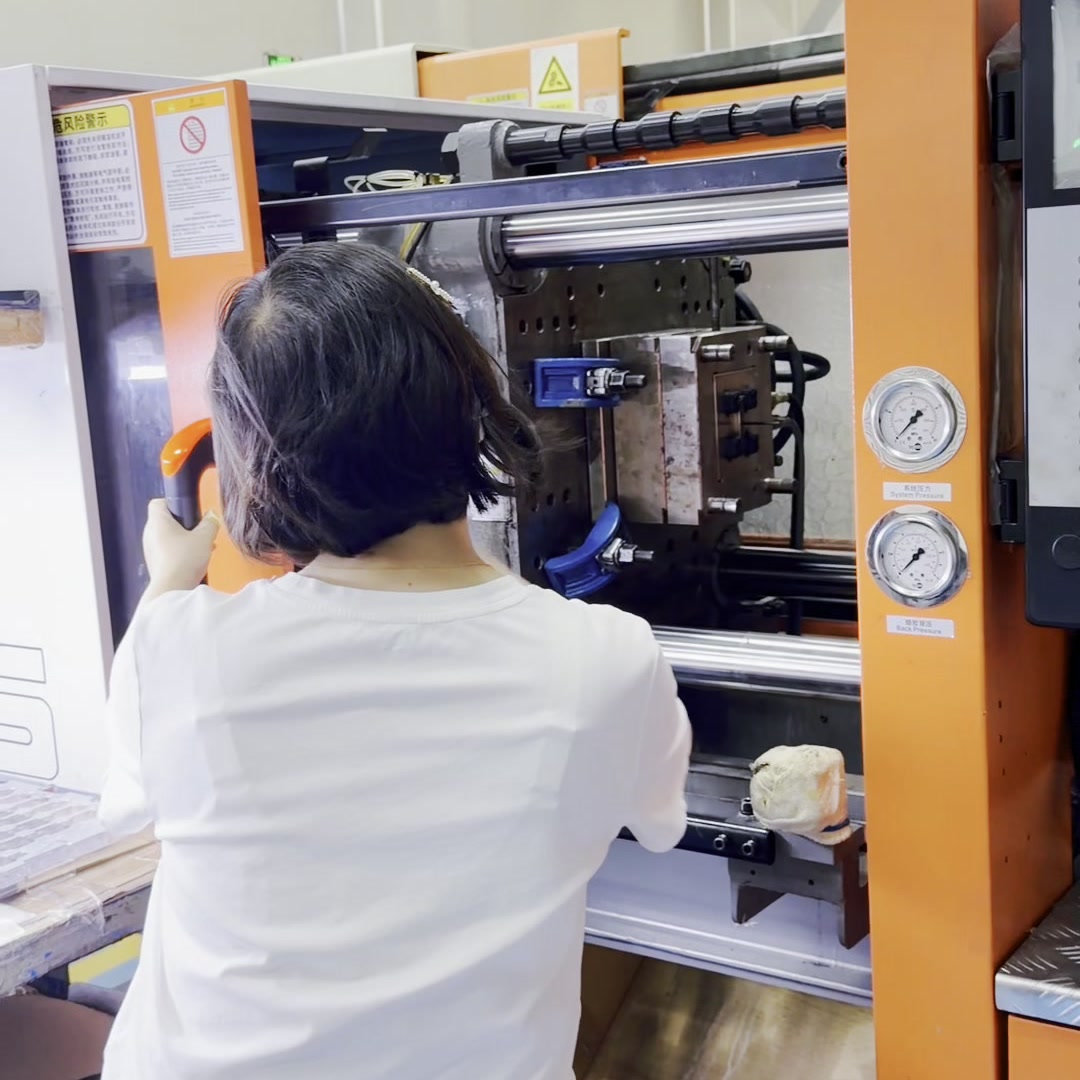
The next scene shows an operator working at the open moulding area of an injection moulding machine. This stage is important during mould installation, trial production, adjustment and planned checks. The operator must follow safe procedures while confirming that the mould, connections and production setup are ready.
Machine settings provide control, but stable production still depends on careful observation. Changes in part appearance, release behaviour or cycle consistency can indicate that the material, mould temperature, cooling, packing or another process condition needs review. Recording the approved settings gives the team a reliable starting point for future runs.
An Organized Production Floor Improves Control
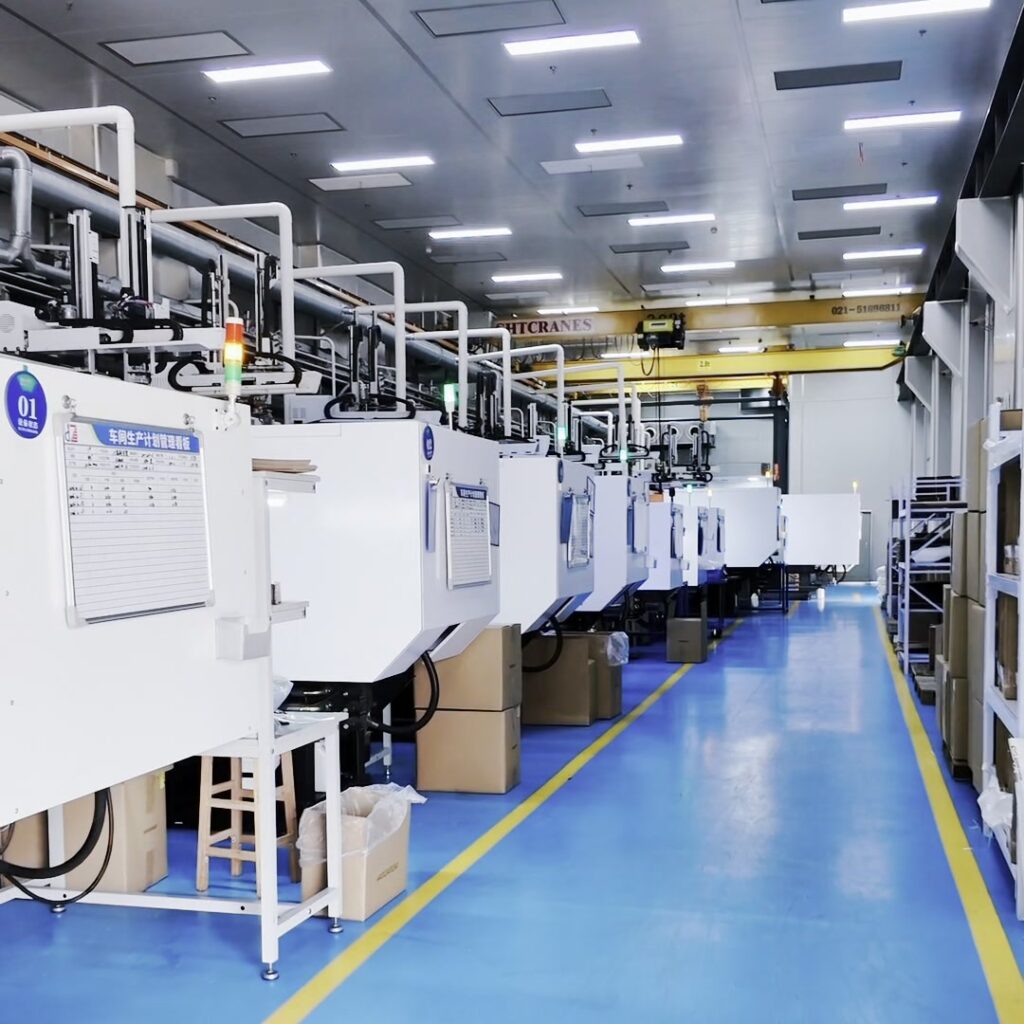
The wide view of the injection moulding workshop shows equipment arranged along a clearly marked production route. Organized machine locations, visible work instructions and defined walkways help teams manage material movement, production checks and routine shop-floor activity.
This organization matters when several moulding projects are running at the same time. Each project can have a different resin, colour, mould, process window and inspection requirement. Clear identification and disciplined handling reduce the risk of mixing information or material between jobs.
JingZhan operates injection moulding equipment from 50T to 500T, supporting smaller precision components as well as larger technical parts. Machine selection is matched to the mould, projected area, material and part requirements rather than based only on the physical size of the component.
In-House Tooling Keeps Feedback Close to Production
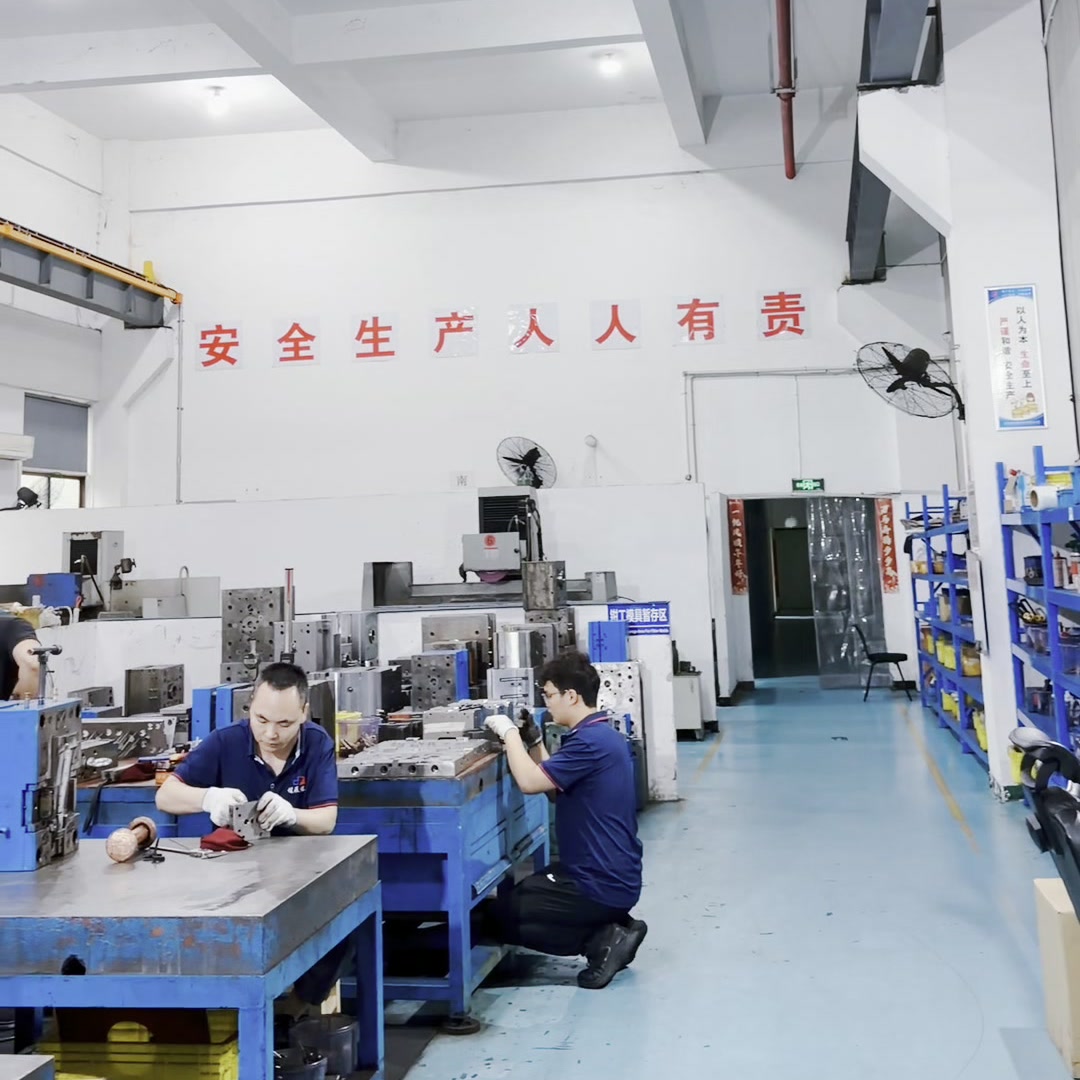
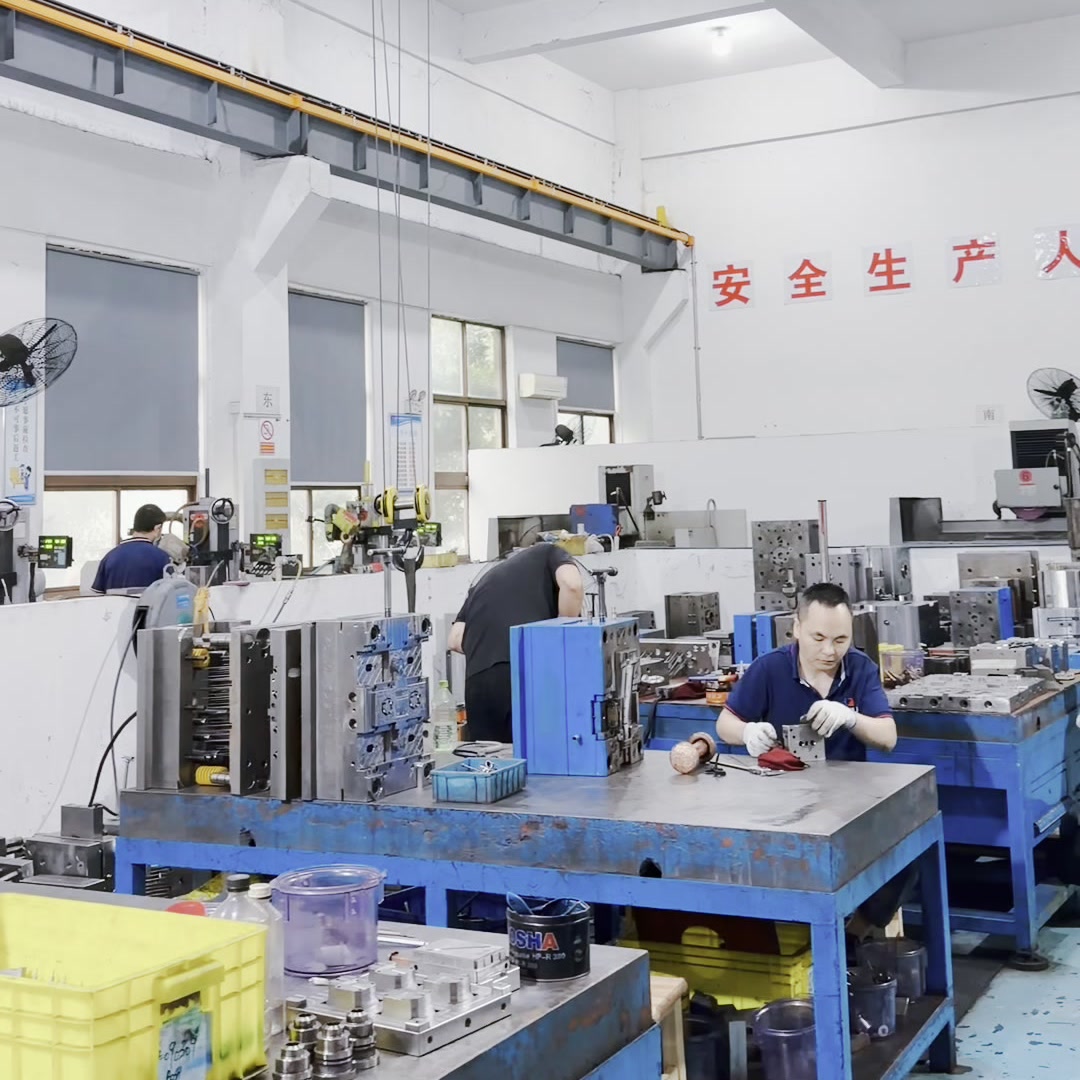
The final part of the video moves into the tooling workshop. Moulds and components are positioned at workstations while technicians carry out fitting, assembly and maintenance work. Overhead lifting equipment supports the safe handling of heavier tooling.
Keeping the tooling team close to injection moulding shortens the communication route when a trial identifies an issue. Instead of describing the result to a remote supplier, moulding, tooling, engineering and quality personnel can review the same part and mould information. The team can then determine whether the correct action is a process adjustment, cleaning, fitting, vent improvement, component repair or an approved mould modification.
Maintenance Supports Repeat Production
A mould is a production asset that must remain ready for future orders. Moving parts, ejector systems, gates, vents, cooling connections and mould surfaces can require different types of attention depending on the resin, design and production history.
When maintenance is connected with actual production feedback, the team can focus on the areas that matter most. After service, the mould can return to trial or production and the resulting parts can be checked against the approved requirements. This closed loop helps preserve continuity between the first successful trial and later repeat orders.
A Connected Route from Tooling to Production
The short video communicates one central idea: injection moulding performance is strongest when the part, machine, mould and technical teams are managed as one connected process. The visible result is a moulded component, but the manufacturing system behind it includes setup control, organized production, tooling knowledge and practical inspection.
Learn more about JingZhan’s precision mould development, injection moulding production and mould repair and modification capabilities.
Do you have a new moulding project or an existing tool that needs production support? Send JingZhan your drawings, material requirements and target volume. Our team can review the project and discuss a practical next step.
Vamos construir moldes de precisão juntos
Envie seus arquivos CAD ou compartilhe as especificações do seu produto. Nossa equipe de engenharia responderá com um orçamento detalhado em 24 horas.